
Catalyst and their #biascorrect campaign they did in 2020 explain very well the duality of language as it colloquially applies to men and women in the workplace within a few images.

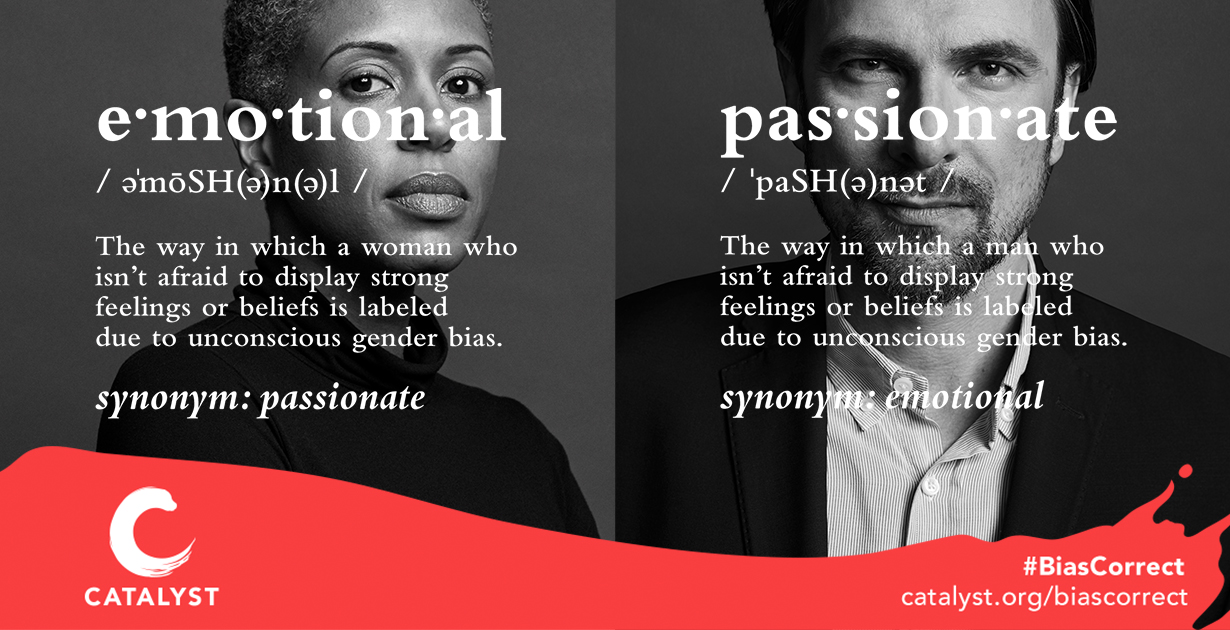
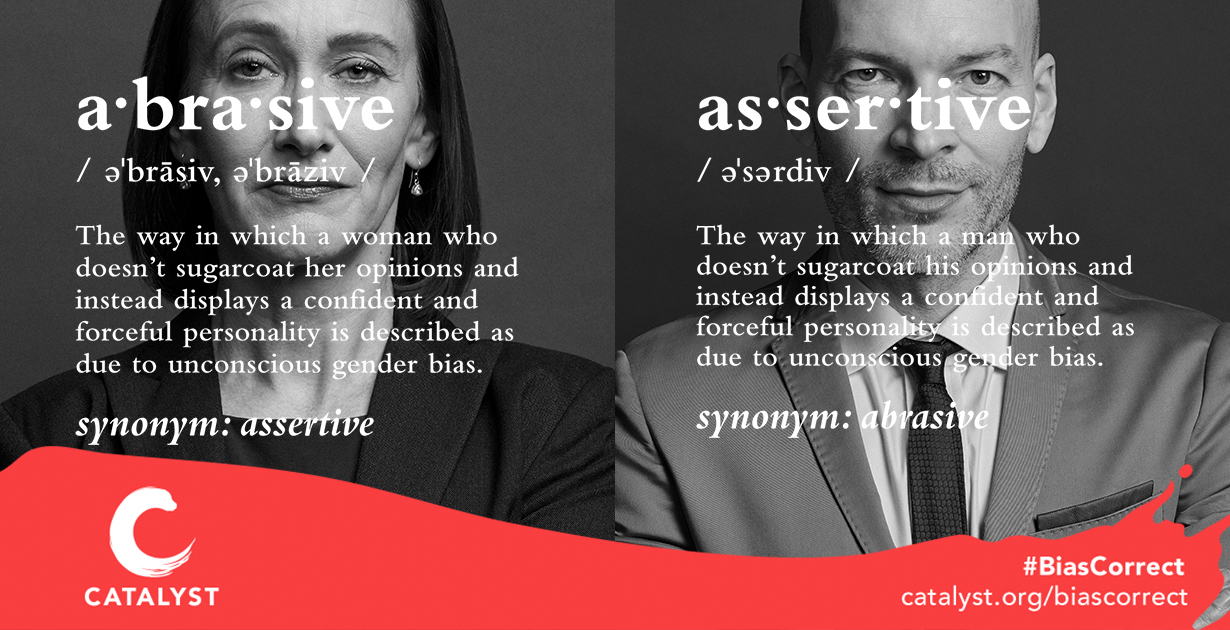
While they are the same humans doing the same tasks and demanding the same things, they are seen differently and therefore treated differently on the basis of their gender. However unfair or unjust it may seem, the truth is that it happens more than we'd care to admit or go to the trouble to fix. This being the case, women are left with two options, to either shy away or accept and move on. Those who choose the latter are the women leaders we see climbing the corporate ladder all while being called "pushy" and any amount of other names they choose to turn a blind eye to.
Can you guess which was which |
People that work to get to be as high and important as

This is not the way of every women leader, it is only one instance based in a fictitious film.
But it feels real.
Why?
The concept of pouring your time, money, effort, life into something is pretty universal.
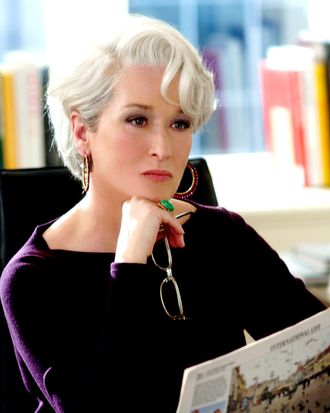
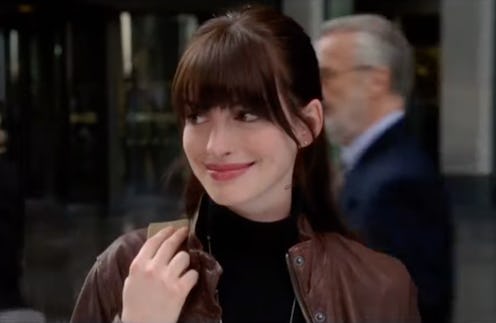
For Miranda, it was her career, becoming so focused that nothing else mattered. Not the trouble of being approachable. Not her husband(s). Not even her kids. They did matter at one point... for approximately 40 seconds before she was back to arranging seating charts for a gathering. Because of this mindset, she was probably the hardest worker out of everyone around her, earning her the highest position she could imagine. But there's a cost, luckily, for her, the cost doesn't seem to bother her (except for about 40 seconds). Luckily for the rest of us who have to answer to superiors, this is not the case for everyone, enter Andy.

She turned it all away, remembering that she wasn't even
interested in fashion at the beginning of the movie. In the end, she landed a new job with a sparkling letter of recommendation from Miranda, which was all she was ever looking for in the first place but that's because it's a movie and it needs a happy ending. The real world is not so assured. That's why Nigel was convinced, diluted, that Miranda would pay him back for her bout of blindside betrayal. Even when questioned he didn't speak on grounds of faith, he said that's what he needed to believe.

Speaking of Nigel, he's probably one of the most interesting characters is the whole film. He plays the role of both follower to Miranda and leader to Andy, doing a good job at both while the two sides seem opposites.
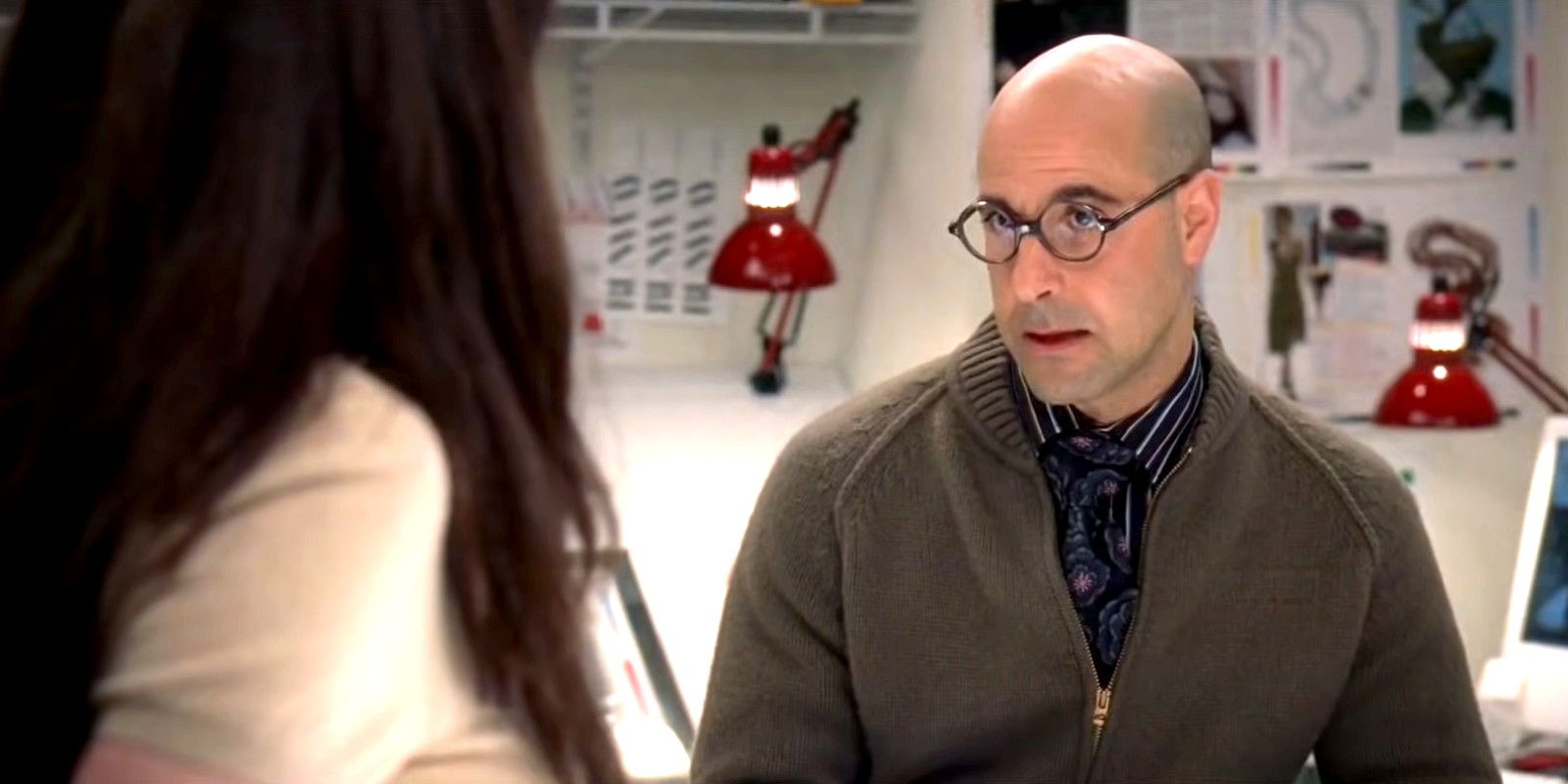
He just needed to explain the mindset that everyone else had in her language (not what Miranda did with the belts), provide a new wardrobe, and she did the rest by herself. A good leader guided in the right direction and a good follower took it from there.
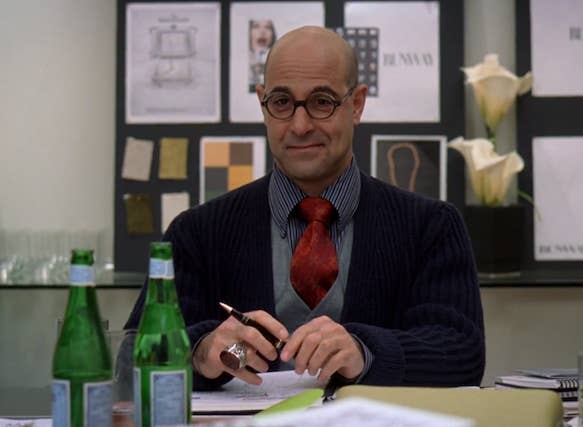
His followership towards Miranda is also good. Whether it's good for him is another issue but his complete lack of self-respect does Miranda really well. So much so that she could metaphorically chain him to her, and she did.
:max_bytes(150000):strip_icc()/050124-Emily-Blunt-Lead-61643ada35164c75a8606dc8941b9591.jpg)
Does this mean she's bossy, emotional, and abrasive or a boss, passionate, and assertive? Hmm
leader - follower relationship.
While these are certainly some versions of followership none of them should not be the kind strived towards because, as a wise man once prompted for a blog post, it does indeed "take two to tango," and Miranda was not giving anything but expectations for the world to bend over backward for her, which, to her credit, they usually did. At the risk of her marriage, children, a semblance of a work-life balance, the mere idea that people might look forward to other presence without the undertones of fear, but hey, people run when she says walk. People's priorities can be different.
References
ivs5200. (2023, September 11). The Dynamics of Followership in “The Devil Wears Prada.” Sites.psu.edu. https://sites.psu.edu/leadership/2023/09/11/the-dynamics-of-followership-in-the-devil-wears-prada/
Carnevale, Gulish, & Smith. (1970, January 1). Women Can’t Win: Despite Making Educational Gains and Pursuing High-Wage Majors, Women Still Earn Less than Men. Digitalgeorgetown. http://hdl.handle.net/10822/1049530

No comments:
Post a Comment